The global travel industry is undergoing a seismic, structural transformation. For decades, the foundational question of tourism was invariably geographic: “Where should we go next?” Holidaymakers would scan brochures, scroll through Instagram, or browse flight comparison engines to pick a spot on the map, then build a rigid itinerary around that location’s famous landmarks.
By 2026, this legacy framework has fractured. Driven by digital fatigue, pervasive corporate burnout, and a profound generational craving for authenticity, global travelers have flipped the tourism equation on its head. Today, the defining question of modern tourism is no longer “Where?” but rather, “Why?”
This profound shift has given birth to the “Whycation” a massive, intent-driven travel movement where the emotional, psychological, or experiential purpose of a journey completely dictates the destination. Instead of chasing viral photo backdrops or running through generic, hyper-scheduled sightseeing checklists, travelers are starting their planning processes from a place of deep internal reflection. They assess their current state of life, identify a core personal need, and let that “why” guide their booking decisions.
Whether it is recovering from severe professional exhaustion, mastering an ancient artisanal craft, or seeking radical silence away from the notifications of a hyper-connected world, the whycation represents a transition from the passive consumption of places to the active creation of personal meaning.
The Core Catalyst Behind the Intent-Driven Tourism Shift
The meteoric rise of the whycation from a niche counter-culture movement to a mainstream consumer phenomenon is backed by extensive empirical research. According to comprehensive data published in the Hilton 2026 Trends Report, which surveyed over 14,000 global travelers across 14 countries, modern holidaymakers are progressively restructuring their lives and financial investments around purpose-driven travel. The traditional holiday, once viewed as a simple luxury or a brief escape from the office, is now treated as an essential mechanism for mental restoration and personal evolution.
This behavioral evolution is fueled by three distinct cultural drivers:
A. The Democratization and Homogenization of Travel
When tens of millions of tourists flock to the exact same global hotspots each year, the conventional tourism experience becomes crowded, expensive, and sterile. The highly curated, algorithmic travel recommendations on social media platforms have created a phenomenon where different cities begin to look and feel identical. The whycation serves as an intentional rebellion against this commercial monotony. It allows travelers to find profound, highly individualized meaning in lesser-known destinations or to approach major destinations via an entirely unconventional route.
B. The Normalization of Professional Burnout
With boundaries between corporate work and personal life permanently blurred by modern remote employment, chronic stress has become an epidemic. Travelers are realizing that traditional, fast-paced vacations filled with endless packing, unpacking, and tight transit schedules do not actually resolve exhaustion; in fact, they often exacerbate it. A whycation explicitly treats travel as a form of therapeutic intervention, allocating vast blocks of time purely for emotional decompression.
C. The Rise of Experiential Modern Longevity
Modern consumers, particularly Gen Z and Millennials, are decoupling their identities from material accumulation. Data from major consumer wellness surveys indicates that experiential spending—specifically on journeys that offer transformation, skill acquisition, or deep cultural immersion—is growing at a rate that far outpaces traditional luxury goods. People no longer want to return home with souvenirs; they want to return home with a different mindset or a new capability.
Diverse Classifications of Contemporary Whycations
Because every individual’s psychological and life circumstances are unique, the whycation manifests in several distinct formats. Travelers select their environment based entirely on the specific internal outcome they wish to achieve.
Immersive Skill Acquisition and Competency Frameworks
For a significant segment of purpose-driven travelers, the ultimate form of relaxation is not idle relaxation, but deep intellectual engagement. These individuals structure their trips around the acquisition or mastery of a specific skill, using the local environment as a living classroom.
A. Culinary Mastery and Heritage Gastronomy
Travelers embed themselves inside regional food ecosystems to study organic agriculture, traditional cooking methods, or specialized culinary sciences. Examples include multi-week pasta-making immersions in regional Italy, intensive spice-blending workshops in India, or ancestral fermentation studies in Japan.
B. Artisanal Craftsmanship and Creative Residencies
Rather than buying mass-produced local art, travelers dedicate their vacations to learning ancient creative techniques directly from master artisans. This includes studying traditional ceramic wheel-throwing in South Korea, structural stone masonry in Europe, or natural textile dyeing practices in Southeast Asia.

C. Environmental and Archaeological Field Work
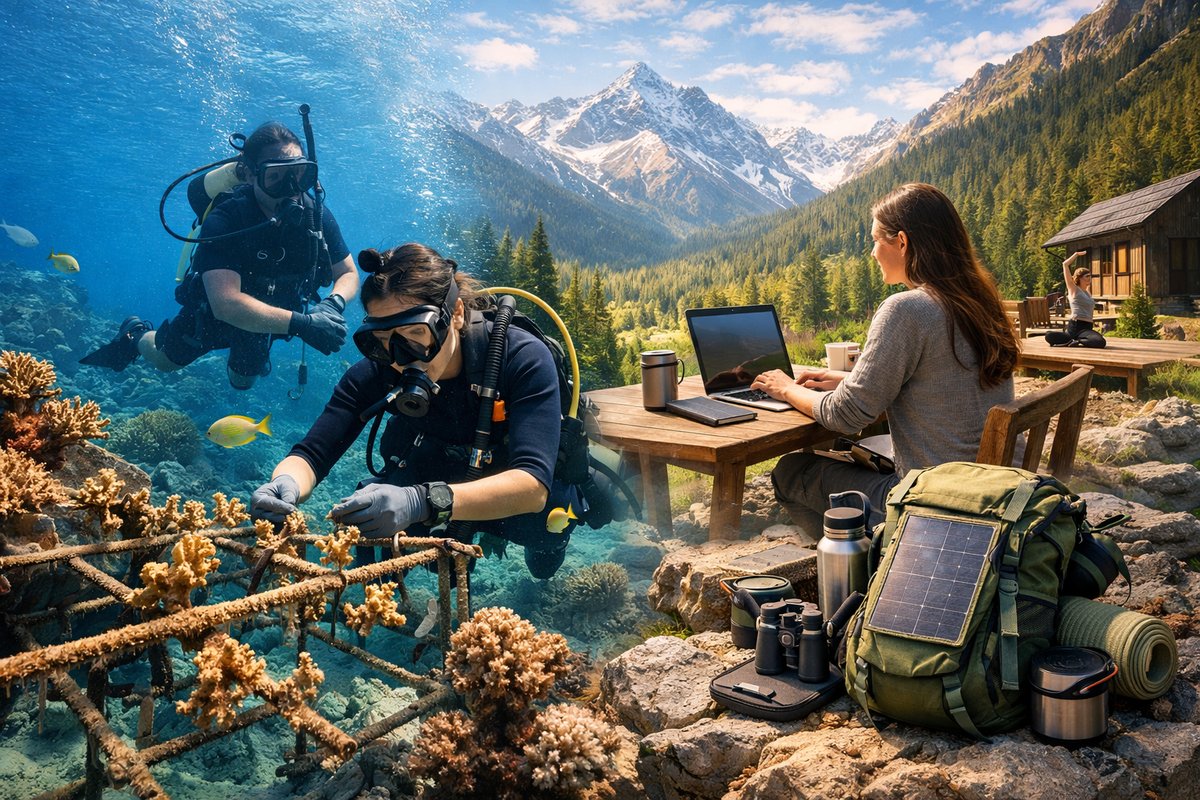
These whycations merge personal education with physical contribution. Travelers join authorized research expeditions, assisting scientists with marine conservation data collection, participating in active archaeological digs, or learning sustainable agroforestry techniques on working regenerative farms.
The Rise of “Hushpitality” and Radical Silence
In an era of relentless digital noise, silence has transformed into the absolute ultimate consumer luxury. This realization has forced a massive paradigm shift within the hospitality sector, giving rise to a specialized movement known as “Hushpitality.”
                  [ MODERN DIGITAL OVERSTIMULATION ]
                                  │
                                  ▼
                     [ THE "HUSHPITALITY" DEMAND ]
                                  │
         ┌────────────────────────┴────────────────────────┐
         ▼                                                 ▼
[ SILENT ARCHITECTURE ]                          [ DIGITAL DEAD-ZONING ]
Properties designed around                       A complete, intentional
acoustic isolation & natural                     severing of all wireless
soundscapes.                                     connectivity.
A. Acoustic Isolation and Silent Architecture
Premium hospitality operators are completely redesigning their physical environments to minimize ambient noise. Accommodations are built using heavy acoustic insulation, deep natural barriers, and layouts that eliminate communal noise, allowing guests to experience complete environmental stillness.
B. Digital Dead-Zoning
Unlike traditional resorts that advertise high-speed Wi-Fi, hushpitality properties often proudly promote a total lack of cellular service or connectivity. Guests are encouraged or required to surrender their digital devices upon check-in, participating in a structured digital detox that forces the nervous system to recalibrate away from algorithmic stimulation.
C. Solo Addendums and Pockets of Solitude
The demand for silence is so pronounced that it is reshaping communal family travel. Industry data reveals that 41% of modern travelers actively seek clear moments of total solitude even when traveling with their romantic partners or children. Furthermore, 35% of family trip planners now routinely add dedicated solo days before or after a group vacation to ensure their personal emotional reserves are replenished.
Inheritourism and Cultural Immersion
Another prominent branch of the whycation movement focuses on identity, legacy, and structural cultural respect. Travelers use their financial resources to build deep, unhurried connections with ancestral histories or regional community realities.
A. Lineage and Ancestry Journeys
Driven by the global accessibility of consumer DNA testing, thousands of individuals travel with the explicit purpose of uncovering their family roots. These trips involve visiting small ancestral villages, navigating regional historical archives, and walking the geographic paths of their forebears to establish a stronger sense of personal identity.
B. Spiritual and Mythological Pilgrimages
Rather than treating religious or historic sites as mere aesthetic backdrops for photography, whycation travelers undertake grueling, deeply intentional historical routes. Whether walking the hundreds of miles of the Camino de Santiago in Spain or spending weeks near spiritual centers along the Ganges River, the primary objective is internal transformation through historic endurance.
C. Grocery Store Tourism and Ordinary Neighborhood Immersion
In an effort to reject artificial, highly staged tourist traps, an overwhelming majority of younger travelers now prioritize ordinary, everyday neighborhood spaces. Exploring local grocery stores, public transit networks, and neighborhood hardware shops allows travelers to observe how a culture actually functions day-to-day, grounding their journey in genuine human reality rather than corporate hospitality scripts.
Comparative Analysis: Traditional Vacations vs. Modern Whycations
To fully comprehend the structural shift occurring within global tourism, it is vital to contrast the operational differences between legacy vacation planning and the modern whycation framework.
| Planning Dimension | Traditional Vacation Framework | Modern Whycation Framework |
| Primary Catalyst | External geographic destination choice | Internal emotional or psychological need |
| Itinerary Structure | Hyper-scheduled, multi-site checklists | Open-ended, single-site, or slow pacing |
| Primary Metric of Success | Volume of landmarks visited and photographed | Level of internal clarity or skill acquired |
| Digital Engagement | Continuous social media posting and updates | Intentional disconnection or “dead-zoning” |
| Work Integration | Rigidly squeezed into strict corporate leave | Integrated via curiosity leave or remote flexibility |
The Operational Mechanics of Planning an Intentional Whycation
Executing a successful whycation requires an entirely different operational approach than traditional trip planning. Because the ultimate goal is internal fulfillment rather than external sightseeing, the logistical blueprint must be carefully curated to protect mental space.
Step-by-Step Strategic Blueprint for Intentional Travel
Psychological Pitfalls and Strategic Mitigation
While the philosophy of whycation travel is profoundly restorative, it is not without distinct operational risks. Travelers transitioning from a traditional, high-stimulation vacation mindset into an intentional travel framework frequently stumble into predictable psychological traps.
A. The Hyper-Optimization Trap
Many Type-A professionals attempt a whycation but inadvertently bring their corporate performance mindsets along with them. They attempt to optimize their relaxation, scheduling back-to-back meditation sessions, rigorous yoga classes, and mandatory journaling hours. This hyper-optimization completely defeats the purpose of the trip, turning self-care into another exhausting corporate checklist.
B. Using Travel as an Escape from Structural Life Issues
A whycation is a powerful tool for short-term recalibration and clarity, but it is not a permanent solution for a toxic lifestyle. Booking a two-week silent retreat will not fix the underlying reality of a fundamentally broken career, an unsustainable workload, or failing personal relationships. Travelers must be honest about what a trip can realistically achieve. The best whycations are viewed as a space to process transitions, not as a geographical hiding place from real-world responsibilities.
C. The Discomfort of Unstructured Time
When forced into an environment with zero notifications, no rigid schedules, and complete quiet, many modern individuals experience sudden waves of anxiety. We have become so conditioned to constant digital dopamine hits that silence can initially feel unsettling. Successful whycation travelers acknowledge this discomfort, resist the urge to immediately reach for their smartphones, and allow their minds to slowly settle into the slower pace of the local environment.

Macroeconomic Implications for the Global Hospitality Industry
The systemic transition from destination-centric travel to intent-driven whycations is forcing the global hospitality network to completely rewrite its business models. Properties, regions, and tourism boards can no longer compete solely on their physical assets, historic monuments, or natural views.
[ LEGACY TOURISM MARKETING ]          [ MODERN WHYCATION MARKETING ]
     "Come see this monument"               "Achieve this state of mind"
     (Asset-Based Model)                     (Experiential Model)
To survive in this new consumer landscape, tourism governance and private operators are pivoting toward the creation of deep symbolic value. Hospitality marketing is shifting its narrative from showcasing what a resort offers to articulating how a guest will transform during their stay.
Properties are increasingly forming strategic partnerships with local artisanal guilds, agricultural cooperatives, and historical preservation societies to offer unvetted, deeply authentic access to regional life. Long-term economic viability belongs to those destinations that master the art of co-creating profoundly quiet, highly educational, and emotionally therapeutic spaces for the intentional modern traveler.
Understanding the Cultural Shift
For an illuminating visual and analytical deep dive into exactly why millions of contemporary travelers are completely abandoning traditional tourist checklists in favor of intent-driven journeys, check out this insightful commentary on Why People Are Ditching Vacations For Whycations. This video provides a fascinating examination of the cultural dynamics driving this movement forward.