The monuments scattered across our globe serve as physical anchors to our shared human narrative. From the sprawling stone layouts of ancient empires to the complex architectural feats of the Renaissance, these structures are far more than mere tourist destinations. They function as living classrooms, cultural touchstones, and economic pillars for local populations. However, as the world moves deeper into the 21st century, these priceless treasures face an unprecedented combination of threats. Climate change, poorly managed mass tourism, urban encroachment, and the simple, relentless march of time all jeopardize their structural integrity.
To ensure that future generations can stand in the shadow of these wonders and experience the same sense of awe, global communities must completely rethink how they approach conservation. Preservation is no longer a passive effort centered around locking a gate and putting up a sign. Instead, it has evolved into a highly dynamic, technologically advanced discipline that balances advanced engineering with profound respect for historical accuracy. This comprehensive deep dive examines the multi-faceted strategies, modern breakthroughs, and community-driven initiatives currently being deployed to keep our shared global history standing strong.
The Primary Threats Endangering Historical Architecture
Understanding how to protect ancient masonry and fragile archeological remains requires a clear-eyed look at the forces actively working to tear them down. Modern conservationists generally divide these destructive elements into three major categories:
A. Environmental and Anthropogenic Pressures
B. Over-Tourism and Foot Traffic Degradation
C. Structural Weakness and Natural Decay
Let us explore how each of these specific threats manifests across different geographic regions.
A. Environmental and Anthropogenic Pressures
Global shifts in climate patterns are accelerating the degradation of ancient materials at an alarming rate. Acid rain, caused by industrial pollution, actively dissolves the delicate limestone and marble carvings of classical European structures. Meanwhile, fluctuating humidity cycles cause salt crystallization within historic brickwork, shattering the material from the inside out. In coastal zones, rising sea levels and intense storm surges present an immediate danger to foundational footings that have remained stable for hundreds of years.
B. Over-Tourism and Foot Traffic Degradation
While global travel democratizes access to culture, the sheer volume of human visitors creates significant physical stress. Millions of footsteps every year gradually wear down ancient stone staircases, while the moisture from human breath inside enclosed spaces—such as Egyptian tombs or Neolithic caves—fuels the growth of destructive mold and microflora. Furthermore, the infrastructure required to support mass travel, including nearby hotels, roads, and transport hubs, frequently disrupts the surrounding water table and destabilizes the ground beneath historic perimeters.
C. Structural Weakness and Natural Decay
Every material possesses a finite lifespan. Wood rots, iron anchors rust and expand, and mortar loses its binding capacity over centuries of exposure. When these natural vulnerabilities interact with seismic activity or extreme weather events, the risk of sudden, catastrophic structural failure increases dramatically.
Modern Technological Interventions in Structural Conservation
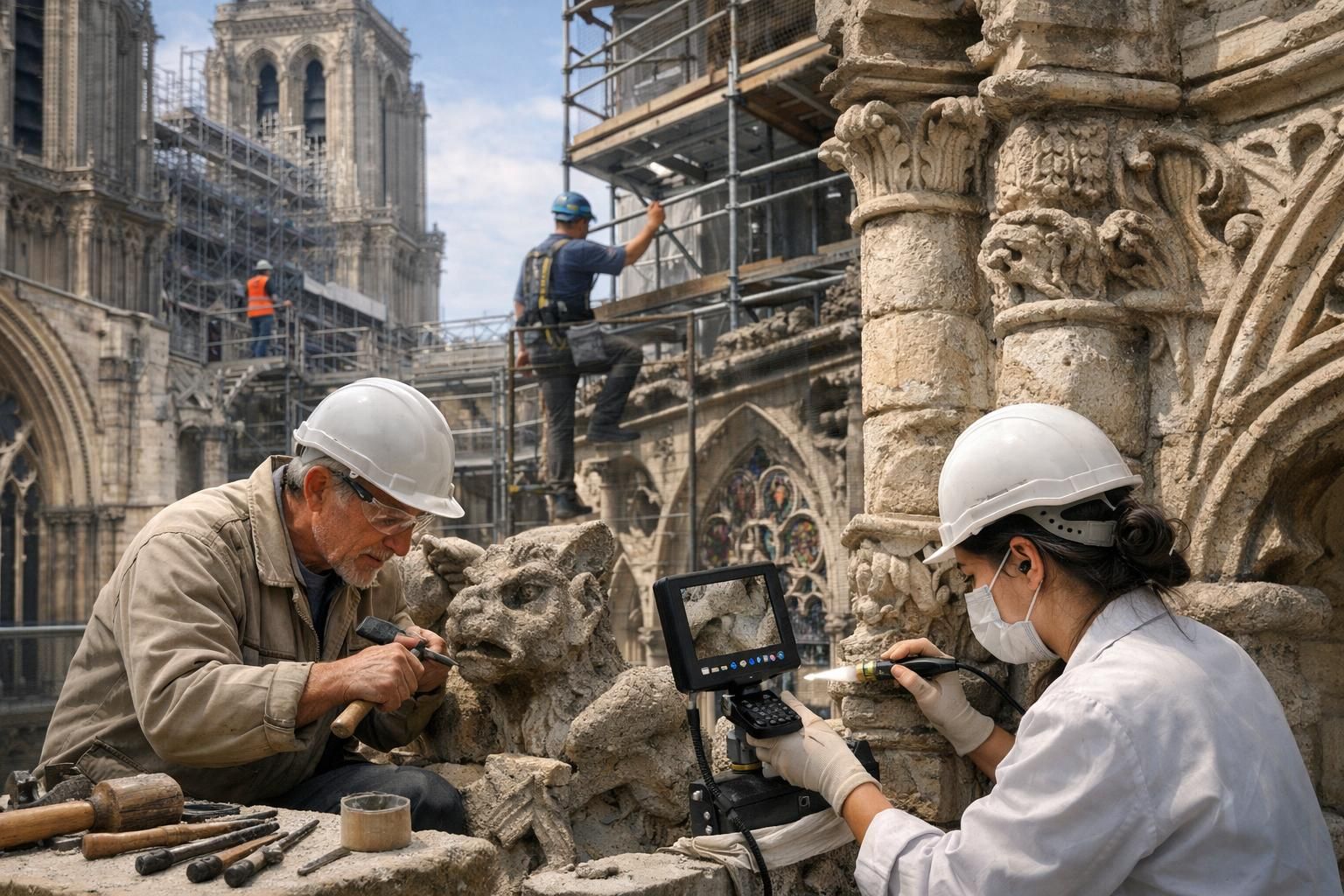
The toolkits utilized by modern preservation teams have changed dramatically over the past two decades. Today, master stone carvers work hand-in-hand with software engineers, material scientists, and data analysts to monitor and repair fragile sites without causing accidental harm.
A. Non-Destructive Testing and 3D Laser Scanning
B. Advanced Material Science and Breathable Mortars
C. Remote Environmental Sensor Networks
A. Non-Destructive Testing and 3D Laser Scanning
Before a single tool touches an ancient surface, conservators must fully understand its internal state. 3D LiDAR (Light Detection and Ranging) scanning allows teams to map monuments down to millimeter-level accuracy. This creates a permanent digital twin of the structure. If an earthquake or fire damages the physical monument, this digital blueprint provides an exact mathematical reference for reconstruction. Additionally, ground-penetrating radar and infrared thermography allow engineers to locate hidden structural voids and internal cracks without drilling into or damaging the original historic material.
B. Advanced Material Science and Breathable Mortars
Early restoration attempts in the mid-20th century frequently relied on modern Portland cement to repair ancient stone buildings. This choice proved disastrous because cement is rigid and impermeable, trapping water inside the softer historical stones and causing them to crack. Modern material science has corrected this approach by reintroducing traditional, lime-based mortars that match the flexibility and breathability of the original construction. Today’s laboratories can even analyze the chemical signature of ancient binders to recreate bespoke batches that blend flawlessly with the surviving historical architecture.
C. Remote Environmental Sensor Networks
Preservation is shifting away from reactive repairs toward proactive, preventative care. Small, non-invasive wireless sensors are now routinely installed across vulnerable sites to monitor subtle microclimatic variations. These devices track minute changes in:
-
Relative humidity within enclosed chambers.
-
Micro-vibrations caused by nearby traffic or rail lines.
-
Tilt and structural shifting along known structural stress lines.
-
Ambient temperature swings that trigger material expansion.
By collecting this data continuously, site managers can detect structural risks long before visible cracks form, allowing for well-targeted, cost-effective maintenance interventions.
Balancing Public Access and Sustainable Site Management
Preserving a historic landmark becomes immensely complicated when that site must simultaneously welcome millions of global visitors every year. Complete closure protects the physical stones but cuts off the cultural connection and vital tourism revenue that funds ongoing conservation. The solution lies in implementing strict, sustainable management frameworks.
A. Implementing Strict Daily Visitor Caps
B. Designing Intelligent Pedestrian Routing
C. Developing Virtual Tourism Alternatives
A. Implementing Strict Daily Visitor Caps
Many of the world’s most iconic destinations have realized that unrestricted access is fundamentally unsustainable. Sites like Machu Picchu in Peru and the ancient citadel of Acropolis in Greece utilize timed entry systems and strict daily visitor limits. By smoothing out peak attendance periods, site managers prevent overcrowding, reduce localized wear and tear, and significantly improve the overall safety and quality of the visitor experience.
B. Designing Intelligent Pedestrian Routing
The physical path a tourist takes can completely alter their impact on a site. Modern park and monument designs use elevated wooden walkways, suspended viewing platforms, and designated paths to keep human weight off fragile surfaces. These architectural additions isolate foot traffic from sensitive archaeological strata, ensuring that visitors can get close enough to appreciate the details without touching or stepping on the ancient materials.
C. Developing Virtual Tourism Alternatives
To take the pressure off vulnerable physical locations, many institutions are investing heavily in high-fidelity virtual reality (VR) and augmented reality (AR) experiences. By utilizing the 3D laser scans mentioned previously, museums can offer immersive digital tours of fragile spaces that are otherwise closed to the public. This approach satisfies global curiosity while keeping the physical site safe from the environmental impacts of human presence.
Case Studies: Successes and Lessons Learned Globally
Examining real-world conservation projects highlights how theory translates into effective action on the ground. Every site presents unique geographical, historical, and structural challenges that demand tailored solutions.
The Dynamic Protection of Stonehenge
For decades, the ancient stone circle of Stonehenge suffered from heavy vehicle traffic along nearby roads, which caused significant air pollution and ground vibrations near the stones. The long-term preservation strategy implemented by English Heritage focused heavily on environmental remediation.
A. Closing and Grassing Over Adjacent Roadways
B. Constructing a Distant, Sustainable Visitor Center
C. Reintroducing Low-Impact Native Grasslands
By removing modern tarmac from the immediate vicinity of the stones and moving the visitor hub well away from the monument, planners successfully restored the historical landscape’s visual context while shielding the delicate megaliths from modern carbon emissions and transport vibrations.
Comprehensive Damage Mitigation in Venice
The historic city of Venice stands as a monumental example of urban preservation in the face of acute environmental threats. Dealing with regular tidal flooding required a massive engineering solution known as the MOSE project. This system uses a series of mobile barriers installed at the lagoon inlets to temporarily isolate the city from the Adriatic Sea during high tides. Alongside this massive infrastructure project, ongoing micro-restorations continue across the city’s historic palaces, focusing on injecting specialized consolidants into waterlogged foundations to prevent the slow sinking of historic facades.
The Critical Role of Indigenous and Local Communities
An often-overlooked truth in heritage management is that long-term preservation is impossible without the active support and involvement of local populations. True conservation must serve the people who live alongside these landmarks, rather than pushing them out.
A. Cultivating Grassroots Economic Ownership
B. Integrating Traditional Craftsmanship Knowledge
C. Fostering Intergenerational Educational Stewardship
A. Cultivating Grassroots Economic Ownership
When local communities benefit directly from the tourism revenue generated by a nearby historical site, they naturally become its most dedicated guardians. Preservation initiatives must ensure that a fair share of entry fees, guiding opportunities, and hospitality revenue remains within the immediate community. This economic integration turns potential site critics into active protectors who work diligently to prevent looting, vandalism, and unregulated commercial development.
B. Integrating Traditional Craftsmanship Knowledge
For many living heritage sites, the best way to maintain the architecture is to utilize the precise traditional skills handed down through generations. Local artisans often possess deep, intuitive knowledge regarding how regional stone, timber, and earth react to local weather conditions. By combining this traditional craftsmanship with modern scientific frameworks, conservation projects achieve an unmatched level of authenticity and durability.
C. Fostering Intergenerational Educational Stewardship
Long-term site protection requires embedding an appreciation for heritage deep within local school curricula. When young people grow up understanding the historical value and global significance of the monuments in their backyard, they are far more likely to advocate for their protection as adult leaders, voters, and professionals.
Frameworks for International Funding and Legal Protection
Because cultural heritage belongs to all mankind, protecting it requires robust international coordination and substantial financial investments. No single nation should have to bear the entire financial burden of protecting globally significant architecture.
“The protection of outstanding cultural property is a responsibility that transcends national borders, requiring unified legal mechanisms and shared financial commitments.”
| Protective Mechanism | Core Function | Primary Global Entity |
| World Heritage Convention | Designates and monitors sites of outstanding universal value | UNESCO |
| The Blue Shield | Protects cultural property from armed conflict and natural disasters | International Committee of the Blue Shield |
| World Monuments Watch | Identifies endangered sites and deploys emergency funding | World Monuments Fund |
International legal designations provide a critical layer of defense, particularly in developing regions or areas facing geopolitical instability. When a site is officially inscribed on the UNESCO World Heritage list, the host country gains access to specialized technical expertise, international financial grants, and global visibility that can drive sustainable tourism development. Furthermore, these international frameworks impose strict preservation standards, ensuring that host governments do not compromise the historical integrity of a site for short-term commercial gains.
Conclusion: A Shared Global Responsibility
Preserving historic global landmarks is an ongoing journey that requires constant adaptation, substantial investment, and deep cultural empathy. It is an intricate balance of science and art, requiring us to look back at our origins while looking forward with advanced technology. By deploying cutting-edge material science, implementing sustainable tourism frameworks, and empowering local communities, the global community can protect these physical testaments to human ingenuity.
Ultimately, these monuments do not belong solely to the past, nor do they belong exclusively to the nations within whose borders they stand. They form the collective memory of the human race. Ensuring their survival is a shared global duty an enduring promise we make to the past, kept alive for the benefit of the future.