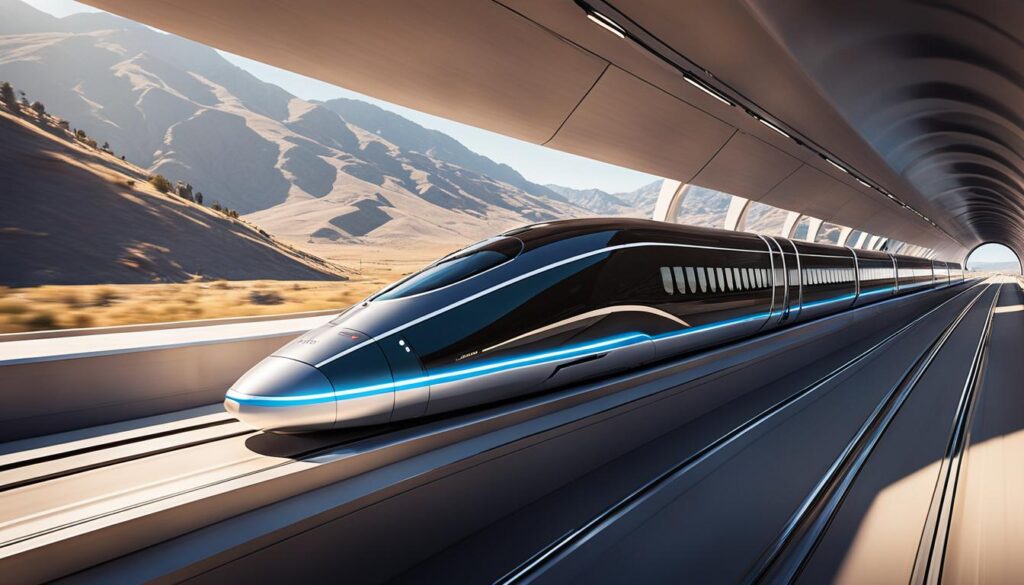
The global transportation sector stands at a critical crossroads. As urban populations swell and the impacts of climate change accelerate, our traditional high-speed transit networks face immense scrutiny. Aviation remains notoriously carbon-intensive, while conventional high-speed rail requires extensive land transformation and heavy continuous power grids. Enter the Hyperloop: a revolutionary ultra-high-speed ground transportation system that promises to bridge the gap between aviation speeds and environmental responsibility.
Academic institutions, private engineering consortiums, and urban planners are heavily invested in Sustainable Hyperloop Transit Research. This in-depth analysis unpacks the scientific, structural, and economical mechanics that could allow Hyperloop systems to serve as the blueprint for carbon-neutral regional connectivity.
Decoding the Physics of Hyperloop Systems
To appreciate the ecological advantages of the Hyperloop, one must first understand the fundamental engineering hurdles it eliminates: aerodynamic drag and mechanical friction. Traditional trains and automobiles waste the vast majority of their energy pushing through atmospheric air resistance. The resistance escalates exponentially as velocity increases.
The Hyperloop circumvents this limitation entirely by operating within a network of sealed steel or composite tubes maintained under a partial vacuum. By utilizing powerful vacuum pumps, the internal tube pressure is reduced to a near-space environment, approximately 100 Pascals. Within this low-pressure environment, the passenger or cargo pods encounter almost zero atmospheric resistance.
To eliminate mechanical friction, Hyperloop research leverages two distinct variations of magnetic levitation (maglev) technology:
A. Passive Magnetic Levitation (Inductrack): This utilizes unpowered loops of wire in the track and permanent magnets on the pod. Levitation is achieved naturally once the capsule reaches a baseline forward speed, optimizing power consumption.
B. Active Electromagnetic Suspension (EMS): This relies on electronically controlled electromagnets to dynamically adjust the gap between the pod and the track, ensuring absolute stability even at speeds exceeding 1,000 kilometers per hour.
By combining a low-pressure environment with magnetic levitation, a Hyperloop capsule can glide across vast distances with minimal energy input. The initial energy required to accelerate the capsule is largely recovered during deceleration through regenerative braking systems, converting kinetic energy back into electrical energy for the grid.
Renewable Energy Integration and Power Architecture
One of the greatest selling points of the Hyperloop is its potential to operate as a net-positive energy ecosystem. Unlike conventional highways or railways that merely consume energy, the linear, elevated nature of Hyperloop tubes provides thousands of kilometers of unused surface area perfectly suited for photovoltaic integration.
Current research indicates that covering the exterior of the elevated tubes with advanced solar panels can generate significantly more electricity than the system requires for daily operations. This excess clean energy can be redirected back into local municipal grids, turning transit corridors into regional power plants. The operational energy framework relies on several core components:
A. Linear Induction Motors (LIMs): Instead of power lines running the entire length of the track, localized linear motors are placed at specific intervals along the tube to provide directional electromagnetic pulses that accelerate and decelerate the pods.
B. Battery Energy Storage Systems (BESS): Massive grid-scale lithium-iron-phosphate or solid-state batteries are stationed at major terminals to store solar energy generated during peak daylight hours, ensuring uninterrupted 24/7 zero-emission operations.
C. Geothermal and Wind Sourcing: In regions where solar exposure is inconsistent, complementary installations of micro-wind turbines along the guide structure and localized geothermal heat exchangers are utilized to maintain tube climate control systems.
Life Cycle Assessment and Structural Footprint
A truly sustainable transit system must be evaluated across its entire life cycle, from raw material extraction to construction and eventual decommissioning. Critics often point out that building thousands of kilometers of steel or concrete vacuum tubes carries a substantial initial carbon cost. However, comparative Life Cycle Assessments (LCAs) indicate that the long-term environmental payback period of a Hyperloop corridor is vastly superior to expanding highway networks or building new airport runways.
When analyzed against high-speed rail (HSR) and short-haul aviation pathways, the Hyperloop presents several distinct environmental advantages:
A. Minimal Land Disturbance: Because Hyperloop tubes are primarily elevated on concrete pylons, they require a significantly smaller ground footprint than multi-lane highways or traditional rail ballasts. This allows agricultural operations or natural ecosystems to continue undisturbed directly beneath the transit line.
B. Low Material Volume Requirements: The internal diameter of a Hyperloop tube is much smaller than the clearance required for standard trains, drastically reducing the total volume of concrete and steel needed per kilometer.
C. Smarter Wildlife Corridor Preservation: Traditional railways act as physical barriers that bisect natural habitats, leading to ecological fragmentation and animal fatalities. Elevated Hyperloop pylons preserve natural wildlife migration corridors entirely.

Economic Viability and Monetization Strategies
From a publisher and digital media perspective, content surrounding Hyperloop infrastructure represents a highly lucrative niche for Google AdSense optimization. High-intent programmatic advertisers, including green energy consortiums, advanced engineering firms, SaaS infrastructure providers, and global logistics companies, bid heavily on keywords related to sustainable transit.
To maximize ad revenue, digital platforms must understand the economic variables currently driving the commercialization of this technology:
| Metric Evaluation | Traditional High-Speed Rail | Short-Haul Aviation | Sustainable Hyperloop |
| Average Velocity | 250 – 350 km/h | 700 – 850 km/h | 900 – 1,100 km/h |
| Carbon Emissions per Passenger | Moderate | Exceptionally High | Absolute Zero (Operational) |
| Rights-of-Way Land Acquisition | High Complexity | Low (Point-to-Point) | Medium (Elevated Design) |
| Weather Dependency Risks | High (Ice/Floods) | Extreme (Storms) | Non-Existent (Enclosed Tube) |
| Operational Energy Self-Sufficiency | 0% (Dependent) | 0% (Fossil Fuels) | 120% (Net-Positive Solar) |
The financial viability of the Hyperloop relies heavily on its capacity to revolutionize freight logistics alongside passenger transit. High-value, time-sensitive cargo, such as medical supplies, fresh produce, and microelectronics, can be moved across continents in hours rather than days. This creates a secondary, incredibly stable revenue stream for operators, insulated from seasonal fluctuations in passenger travel.
Overcoming Engineering and Safety Hurdles
While the sustainability metrics of Hyperloop transit are undeniable, public adoption and regulatory approval hinge entirely on resolving complex structural and human safety concerns. Operating a high-speed vehicle within a vacuum tube leaves zero room for error, requiring researchers to develop fail-safe mechanisms for every conceivable contingency.
A. Thermal Expansion Management: Because steel tubes span hundreds of kilometers across changing landscapes, solar heating can cause the tracks to expand or contract by several meters. Researchers utilize specialized telescoping expansion joints that maintain a perfect vacuum seal while allowing structural shifting.
B. Rapid Emergency Depressurization: In the rare event of a capsule breakdown, the tube must be brought back to standard atmospheric pressure safely and quickly. Automated, high-capacity air valves are placed every few kilometers to repressurize localized segments, allowing passengers to exit via emergency hatches without compromising the entire network.
C. Human G-Force Comfort Adjustments: Traveling at Mach speeds requires exceptionally wide turning radii. Hyperloop alignment routing must be remarkably straight; any banking maneuvers must be calculated precisely to ensure passenger G-forces never exceed those experienced on a standard commercial flight.

The Path Toward Global Implementation
The transition from theoretical research to physical global implementation requires unprecedented alignment between private tech innovators and state governments. Regulatory frameworks are currently being drafted across the European Union, Asia, and North America to establish strict safety and standardization criteria for vacuum-based transit.
The rollout of global Hyperloop networks is projected to follow a highly structured, multi-phase timeline over the coming decades:
[Phase 1: Controlled Prototyping] -> Validation of subscale vacuum dynamics and maglev stability.
[Phase 2: Cargo Validation] -> Cross-border freight freight routes to prove economic and operational viability.
[Phase 3: Passenger Certification] -> Regulatory approval of human-rated capsules and medical clearances.
[Phase 4: Full Intercontinental Grid] -> Continental networks powered entirely by integrated solar routes.
By prioritizing carbon neutrality, minimized geographic disruption, and net-positive energy architecture, the Sustainable Hyperloop represents far more than a simple mechanical upgrade to modern trains. It stands as a comprehensive paradigm shift in how human civilization approaches regional connectivity, demonstrating that ultra-high-speed mobility does not have to come at the expense of our planet’s ecological survival.